Upsun

Making flexible pricing easier to understand.

Making flexible pricing easier to understand.

Making flexible pricing easier to understand.

When Upsun launched, it introduced a flexible resource-based pricing model. I led research and design to understand how customers responded to the model, then translated those findings into a clearer pricing page and a granular pricing calculator.

When Upsun launched, it introduced a flexible resource-based pricing model. I led research and design to understand how customers responded to the model, then translated those findings into a clearer pricing page and a granular pricing calculator.

When Upsun launched, it introduced a flexible resource-based pricing model. I led research and design to understand how customers responded to the model, then translated those findings into a clearer pricing page and a granular pricing calculator.

Role

Lead Product Designer

Focus

User research · Pricing strategy · UX/UI · Web Design

Timeline

2023 · 6 months

Collaboration

Product · Engineering · Marketing

01 / The Challenge

More flexibility also meant more to understand.

More flexibility also meant more to understand.

Upsun gave customers more control over the resources they used and how they paid for them. But before launch, we needed to understand whether customers saw value in the new model, understood how it worked, and felt confident determining what it would actually cost them.

Upsun gave customers more control over the resources they used and how they paid for them. But before launch, we needed to understand whether customers saw value in the new model, understood how it worked, and felt confident determining what it would actually cost them.

02 / Research

Flexibility made sense. Predictability was the challenge.

Flexibility made sense. Predictability was the challenge.

Research showed that the idea of paying for the resources used was intuitive in principle. The uncertainty arrived when people tried to connect that model to their own infrastructure, usage patterns, and budget.

Research showed that the idea of paying for the resources used was intuitive in principle. The uncertainty arrived when people tried to connect that model to their own infrastructure, usage patterns, and budget.

01

The model was familiar, but the details needed explanation.

The model was familiar, but the details needed explanation.

02

Different customers evaluated pricing differently.

Different customers evaluated pricing differently.

03

Customers wanted to model their own costs.

Customers wanted to model their own costs.

03 / Designing the Experience

A pricing page built for progressive understanding.

The page introduces the pricing model at a high level before progressively revealing how individual resources, project fees, storage, backups, and user licenses contribute to cost. Customers who need more detail can continue into the complete feature breakdown.

The page introduces the pricing model at a high level before progressively revealing how individual resources, project fees, storage, backups, and user licenses contribute to cost. Customers who need more detail can continue into the complete feature breakdown.

04 / Pricing Calculator

Turning flexible resources into a tangible cost.

Turning flexible resources into a tangible cost.

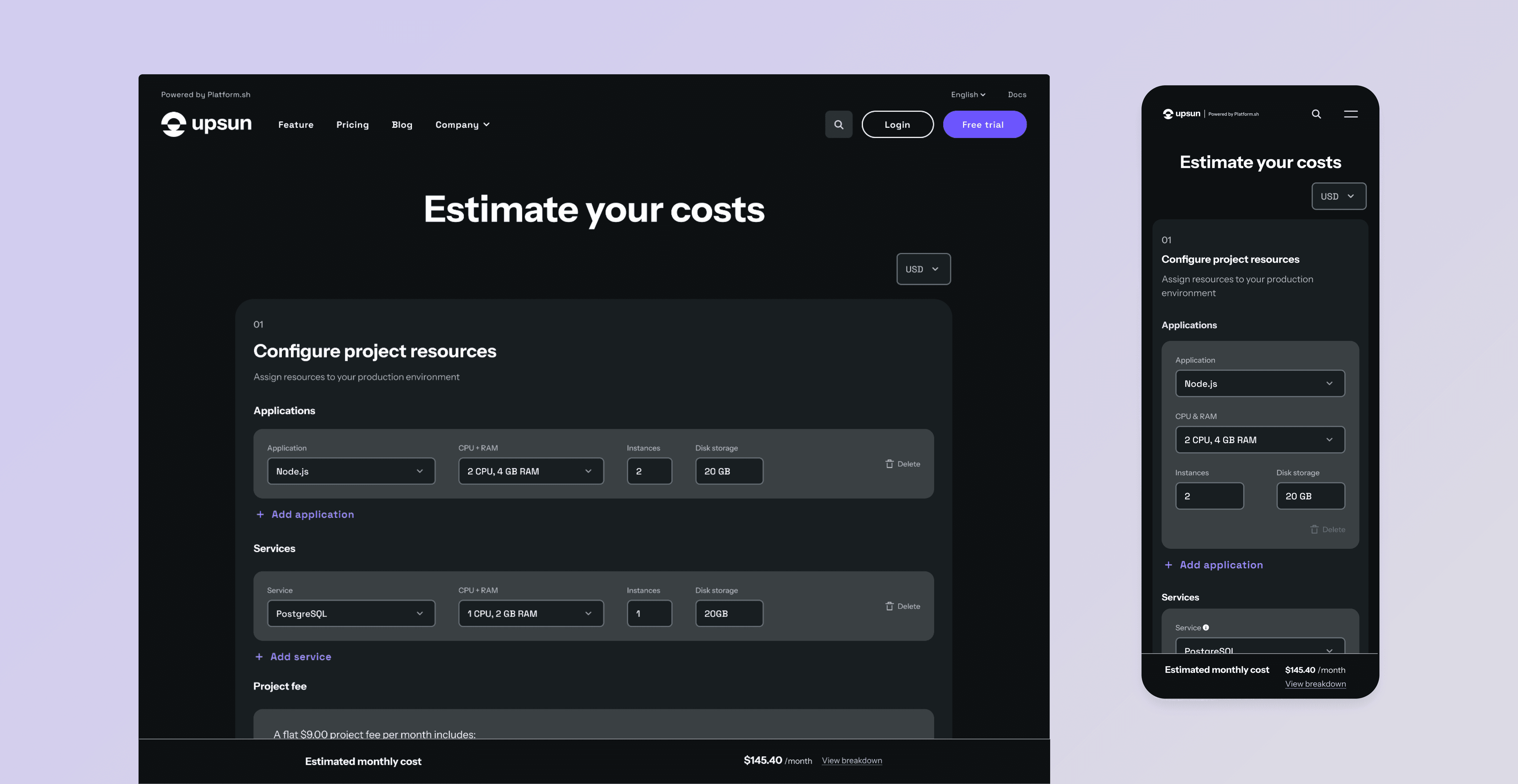
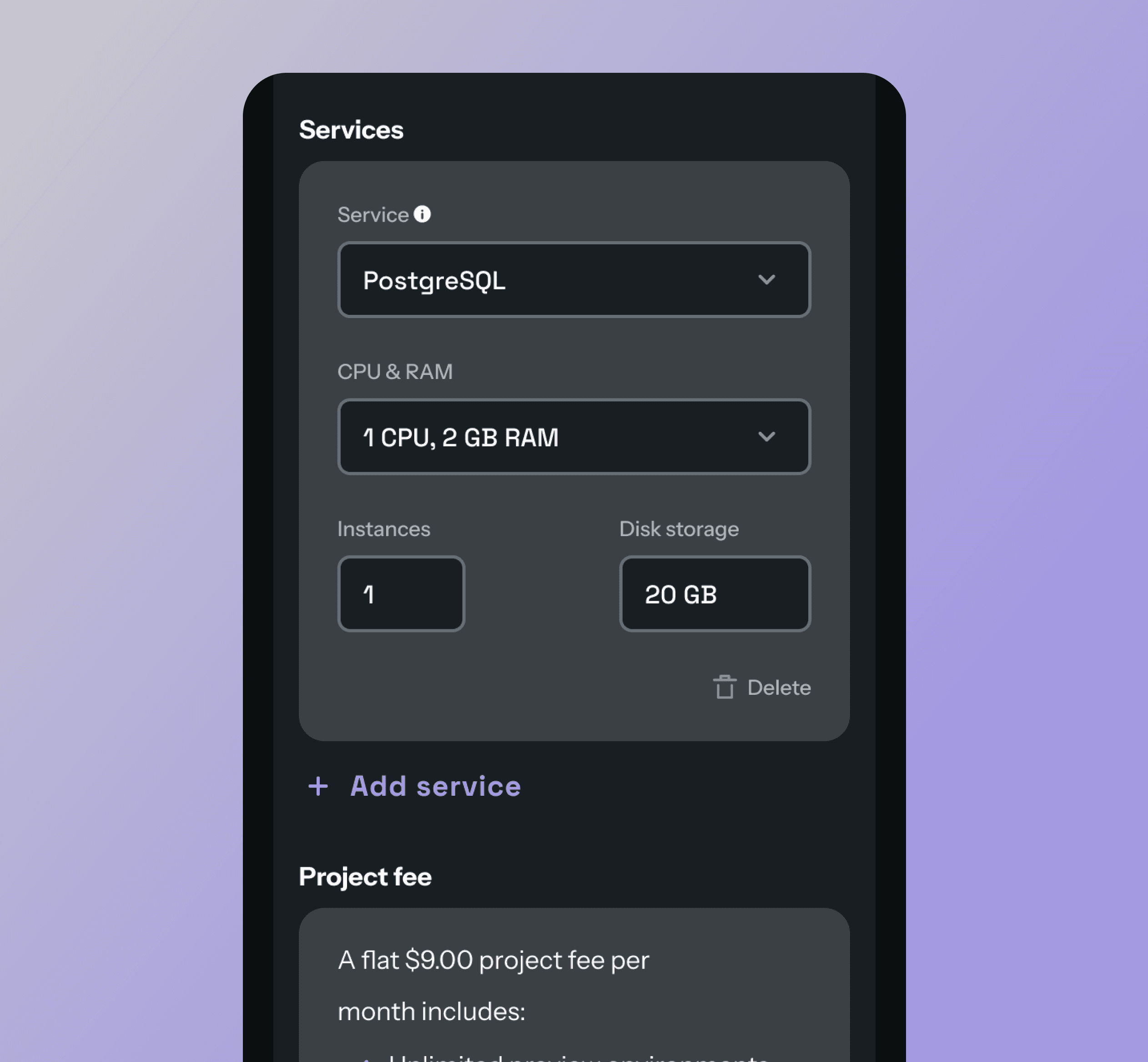
The strongest research signal was the need to estimate a real configuration. I designed a calculator that let customers configure applications, services, storage and team needs while seeing the impact on their estimated monthly cost.

The strongest research signal was the need to estimate a real configuration. I designed a calculator that let customers configure applications, services, storage and team needs while seeing the impact on their estimated monthly cost.

outcome

Launch revealed a need for two levels of control.

Launch revealed a need for two levels of control.

Simplicity helped with initial understanding
For some customers, too much configuration made estimating costs harder rather than easier.


Power users wanted more granularity
Customers with more complex infrastructure needed additional controls to create an estimate they could trust.


The next iteration is moving toward two experiences: a simple calculator for quickly estimating costs and an advanced calculator for customers who need to model their infrastructure in greater detail.

© 2026 Louise Boyle